Blaise Zabini
The Rules of WerewolfBlaise Zabini is a charismatic former Slytherin whose confidence, humor, and ease within mixed social circles make him one of the clearest signs that old Hogwarts divisions are losing their force. He moves comfortably among former rivals, professional peers, and flirtatious friends, treating status as something to play with rather than defend solemnly. His importance is not based on a solitary heroic arc, but on the social energy he brings to gatherings: he welcomes newcomers, wagers on their arrival, provokes Pansy Parkinson, singles out Ginny Weasley with unmistakable warmth, and helps transform Theodore Nott’s birthday party from an awkward experiment in inter-house contact into a setting where attraction and friendship can develop.
Identity and Social Position
Blaise is introduced as a member of the Slytherin circle surrounding Theodore Nott, Pansy Parkinson, Draco Malfoy, and Daphne Greengrass. Unlike Draco Malfoy, who arrives resentful of public scrutiny and uncomfortable with being valued for his donations rather than his work, Blaise appears to understand the social grammar of influence and use it playfully. At the party, he confidently tells the arriving group that he is already fifty galleons ahead because he knew they would come. The wager establishes him as observant, competitive, and socially prepared, but it also makes his welcome feel theatrical rather than hostile.
His confidence is tied to upbringing, yet the narrative does not reduce him to inherited privilege. He greets Harry Potter with assurance, shakes his hand, and immediately turns his attention toward the bar and the guests. The same polished ease that marks his entrance allows him to move between public charm and private teasing. He belongs to a wealthy and formerly divisive social world, but his behavior repeatedly loosens its boundaries instead of enforcing them.
Role at the Birthday Party
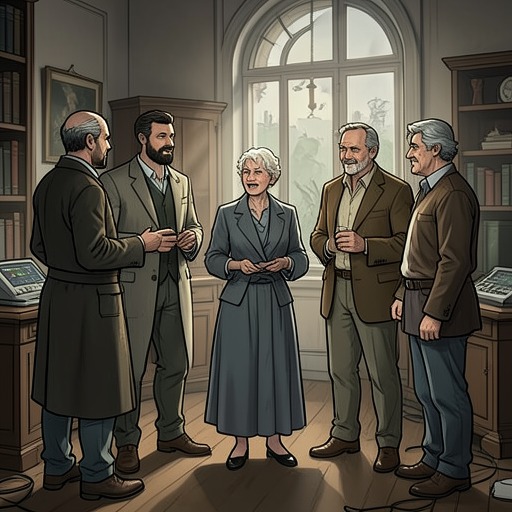
Blaise is part of the mixed cohort gathered at Nott Manor, where a house-elf admits the guests to the library for cocktails. The setting brings together Slytherins and Gryffindors, professionals from different branches of wizarding society, and people whose school histories once made ordinary socializing difficult. Blaise’s presence helps make that mixture seem viable. He is not shown apologizing for the past or delivering a formal reconciliation; instead, he makes the new arrangement feel natural through banter, wagers, handshakes, and flirtation.
His interaction with Pansy reveals the argumentative side of his charm. The two are locked in a heated dispute, with Blaise insisting that Pansy is wrong and claiming that he would know the difference under discussion. Pansy challenges his confidence, and he responds with exasperation rather than retreat. Their exchange resembles the wider story’s preferred mode of conflict: sharp enough to generate comic friction, but intimate enough to suggest familiarity and trust. Blaise’s arguments do not threaten the group’s cohesion; they animate it.
He is especially attentive to Ginny. When the guests arrive, Blaise looks past Harry and addresses her with extravagant delight, placing his hands over his heart and invoking her by the more formal name Ginevra. Ginny Weasley later describes him to Hermione Granger as funny because he does not take himself too seriously, adding that she wants fun. That description identifies the quality Blaise contributes to the story: he offers relief from solemnity, and his humor becomes a form of romantic possibility rather than merely comic decoration.
The Werewolf Game
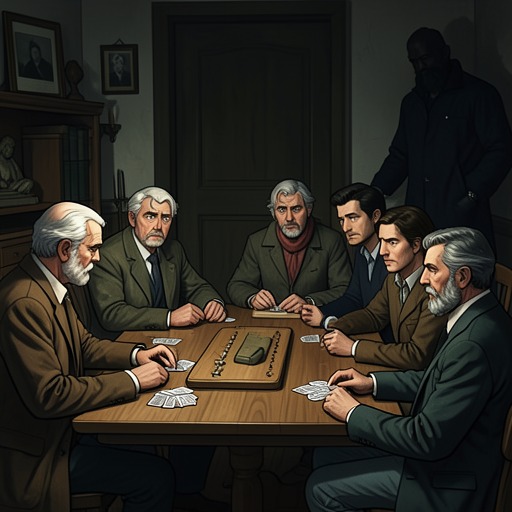
Blaise’s most consequential party function comes through the game of Werewolf. Pansy explains that each participant receives a hidden role: one werewolf, one healer, and villagers, with the werewolf naming a victim at every full moon and using legilimency under the game’s special enchantment. Blaise is eventually announced as the second victim. His elimination is therefore fictional and temporary, but it gives the game a small dramatic reversal: the character who seemed so socially secure is suddenly removed from the circle and becomes an object of speculation.
The game also exposes Blaise’s ability to remain composed while the surrounding players become increasingly invested. His exit is performed with deliberate elegance. He takes Ginny Weasley’s hand, kisses it, and departs with a farewell before sauntering toward the cheers of Theodore Nott. The gesture turns elimination into another opportunity for performance and flirtation. Even as a “victim,” Blaise retains control of the room’s emotional temperature, converting defeat into theatrical charm.
His presence continues to shape the game after his removal. Draco uses the gathering’s heightened atmosphere to accuse Ginny of being the werewolf and to make insinuations about several possible couples, including Ginny and Blaise. The accusation is not merely a tactical move within the game; it becomes part of the party’s broader pattern of teasing people into acknowledging attractions they would otherwise keep private. Blaise therefore functions as both participant and catalyst: the game removes him from play, but his connection with Ginny remains visible enough for Draco to exploit.
Relationships and Group Dynamics
Blaise’s principal romantic connection is with Ginny Weasley. Before their relationship is fully established, Ginny’s description of him emphasizes his humor and her desire for uncomplicated enjoyment. At the later gathering in Nox, the group’s relationships have become more openly integrated, and Blaise is seen with his arm securely around Ginny’s waist. The physical ease of that image confirms that the attraction glimpsed at Theodore’s birthday has developed into a relationship rather than remaining a party flirtation.
His connection with Ginny also reflects the story’s larger movement from rivalry toward chosen intimacy. The social group is “exceedingly mixed,” combining former Slytherins and Gryffindors in a way that would once have seemed improbable. Blaise does not erase house identity; his confidence, language, and manner remain recognizably Slytherin. Instead, he demonstrates that those identities can persist without dictating whom a person may welcome, desire, or trust.
His friendship with Pansy and association with Draco and Theodore place him within the Slytherin network, while his easy contact with Harry and Ginny lets him cross into the Gryffindor circle. He is consequently less a solitary romantic figure than a connective presence. Through him, the party’s old social categories become porous, and the comic antagonism between houses can coexist with handshakes, shared games, professional respect, and physical affection.
Narrative Function and Significance
Blaise embodies the story’s romantic-comedy method of converting conflict into intimacy. His confidence creates friction with Pansy, his performance turns apparent defeat into entertainment, and his attention to Ginny gives the party a visible current of attraction. The narrative does not place him at the center of the major professional revelations, such as Hermione Granger’s approved reworking of the Trace, nor does it make him responsible for Draco Malfoy and Hermione Granger’s developing relationship. His importance is instead social and tonal: he helps make the world around those central developments lively, permissive, and interconnected.
The contrast between Blaise and Draco is particularly useful. Draco feels alienated in a room filled with impressive people and worries that public recognition is being purchased through donations, while Blaise enters the same environment as though it were already his stage. Yet Blaise’s confidence is not presented as simple domination. He can be challenged by Pansy, removed from the Werewolf game, and folded into a relationship with Ginny without losing his poise. His strength lies in adaptability: he can turn status into humor, disagreement into play, and public attention into flirtation.
By the time the group reunites at Nox, Blaise’s arm around Ginny’s waist gives the earlier party scenes a retrospective shape. The birthday celebration, the game, and the teasing accusations have not dissolved into isolated amusement; they have helped produce a durable social arrangement. Blaise’s ending position is therefore quietly decisive. He stands within the mixed community that the story has been assembling, not as a relic of Slytherin exclusivity, but as one of the people who make post-war friendship and romance across former boundaries look ordinary.